Where to Live in Knoxville When You Work from Home

Bart Franklin
Knoxville Real Estate Expert · 160+ Families Served
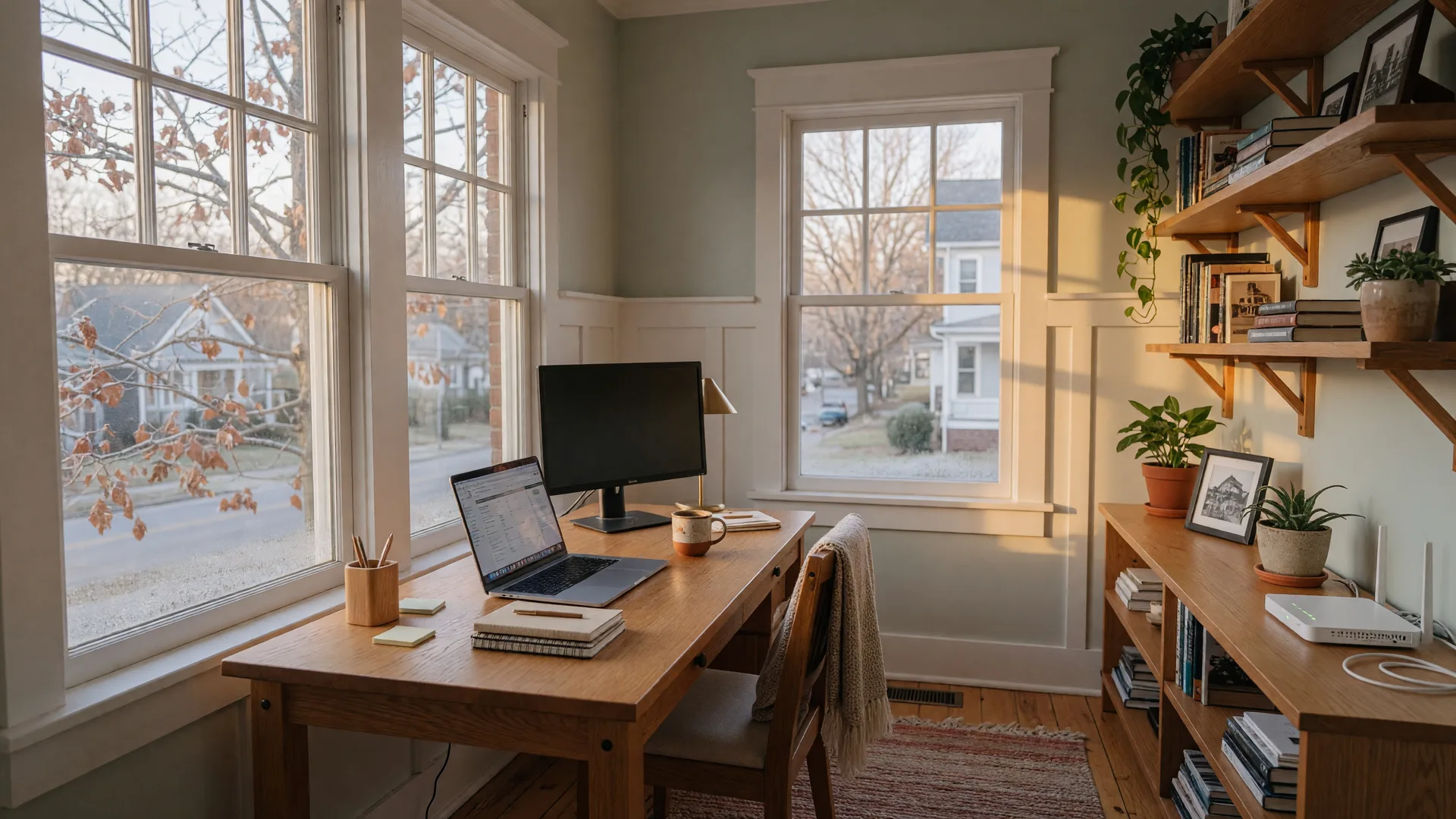
If you work from home, the neighborhood math changes. Knoxville's median home price runs well below the national average, Tennessee takes no state income tax, and gigabit fiber internet from KUB costs $65 a month, so the communities that suit remote workers best are the ones with reliable internet, a real room for a home office, an airport you can actually reach, and enough local life to make a Tuesday feel different from a Monday. Over the past two years I have helped dozens of remote and hybrid workers find exactly that combination, and the search always starts with a different set of questions than the ones commuters ask.
The data backs me up. More than one in seven workers in Knox County now works from home at least some of the time, and multiple 2026 studies ranked Knoxville the number one U.S. city for people moving in versus moving out, with remote workers called out by name as a big part of the story. This guide walks through the five priorities that actually matter when your commute is zero steps: fiber coverage, home office space, airport access, walkable workday life, and room for a second career. I will tell you which neighborhoods check each box, and the checklist at the end will keep you honest before you make an offer.
The Numbers Behind Knoxville's Remote Work Boom
Knoxville keeps showing up on lists that remote workers actually read. moveBuddha's Moving Forecast for 2026 ranked Knoxville the top U.S. city for predicted net in-migration, with roughly 1.61 people moving in for every person moving out, and it ranked the city eighth the year before. Quartz added Knoxville to its list of the ten best U.S. cities for remote workers to buy a home in 2026, pointing at a city-level median sale price near $325,000 and a cost of living roughly 14 percent below the national average. Those are city-level numbers; across the metro, sale prices have clustered around the low $400,000s for most of late 2026, which my market report tracks week to week.
Locally, the census data shows where that growth is coming from. According to the 2024 American Community Survey, about 14.4 percent of workers in Knox County work from home, making it the second most common way Knoxvillians get to work after driving alone. Tennessee as a whole sits at about 12.9 percent, so Knox County runs ahead of the state. And the people really are arriving: University of Tennessee estimates cited by Knox News put Knox County net migration at about 5,172 new residents between July 2023 and July 2024, with roughly 30,000 people added since 2020. Throw in no state income tax and a four-season climate, and it is not hard to see why the movers who can work anywhere keep choosing East Tennessee.
Priority One: Fiber You Can Actually Rely On
The first question I ask every remote worker is not about square footage, it is about internet. KUB Fiber, Knoxville's municipal fiber network, has been rolling out neighborhood by neighborhood as part of a roughly $702 million buildout, and it had passed more than 84,000 addresses by early 2026, with full coverage projected by 2028. The pricing is remarkable for anyone coming from a big-city provider: the flagship gig plan runs $65 a month with symmetrical 1,000 Mbps upload and download, no data caps, no contracts, and no equipment rental. There are faster tiers too, 2.5 gig at $150 and 10 gig at $300, but for almost every home office the $65 gig is the one you want.
Coverage is address-specific, which is why the neighborhood guides are only the starting point: KUB has it in South Knoxville pockets like Vestal, Island Home, Old Sevier, and along Cherokee Trail, in East Knoxville neighborhoods like Parkridge and Morningside, in North Knoxville including Fourth & Gill, Fountain City, and Halls, and in West Knoxville including Bearden, Sequoyah Hills, West Hills, and Rocky Hill. The 2025 expansion added parts of Strawberry Plains and Holston Hills, and the buildout keeps moving. Before you make an offer on any house, type the address into KUB's address lookup and confirm the fiber line is actually at that lot, not just in the neighborhood. That ten-second check has saved several of my clients from buying a great house on a street the buildout has not reached yet.
Priority Two: A Real Room for the Workday
Once the internet is settled, the next question is whether the house gives you a workspace that does not double as the kitchen table. The homes that work best have a dedicated room with a door, or at minimum a den or flex space with a wall long enough for a desk and a second monitor, natural light, and decent outlets. It sounds obvious, but I have shown houses to remote buyers where every bedroom was already spoken for and the only option was a landing at the top of the stairs.
The neighborhoods with the best match depend on the house you want. Newer construction in Hardin Valley, Farragut, and much of West Knoxville tends to include flex or bonus rooms over the garage, which make excellent offices or studios. Older, character-rich homes in Sequoyah Hills, Fourth & Gill, and Old North Knoxville often have formal dining rooms and dens that convert beautifully, and the mature trees make the street genuinely quiet during a 2 p.m. call. If two of you work from home, budget for two separate spaces: couples I have worked with almost always regret not planning for the second office up front, and adding one later is expensive.
Priority Three: The Airport Factor
Remote does not mean grounded. McGhee Tyson Airport, known locally as TYS, sits in Alcoa about 12 miles from downtown Knoxville, and for anyone who flies monthly for work or family, the drive to the terminal decides the neighborhood more than almost anything else. From the south, Maryville and Alcoa are an easy 8 to 10 minutes from the airport, which is why airline families and frequent flyers love Blount County. Downtown Knoxville runs about 15 to 20 minutes up Alcoa Highway, Bearden and central West Knoxville about 15 to 20 minutes, Farragut about 20 to 25 minutes via Pellissippi Parkway, and Hardin Valley a comparable 20 to 25.
If you travel weekly, I would test the airport drive at the time you would actually make it, because weekday afternoon traffic on Alcoa Highway moves differently than a Saturday-morning test drive. If you fly a few times a year, any of these work fine, and the airport's central location means nobody in the metro is more than about half an hour from a departure gate. My commute guide has the full drive-time breakdown for every community if you want the detailed version.
Priority Four: When You Want the Workday to Feel Different
The biggest complaint I hear from remote workers is not the quiet, it is the sameness of spending every day in the same four walls. That is where walkability earns its keep. Downtown Knoxville and the Old City are the answer for people who want to step out of a condo or loft, grab coffee on Market Square, and take a mid-afternoon lap past the shops on Gay Street. Condos and lofts come at a premium, typically a few hundred thousand and up depending on the building and parking, but you are buying the walkable rhythm of the city itself.
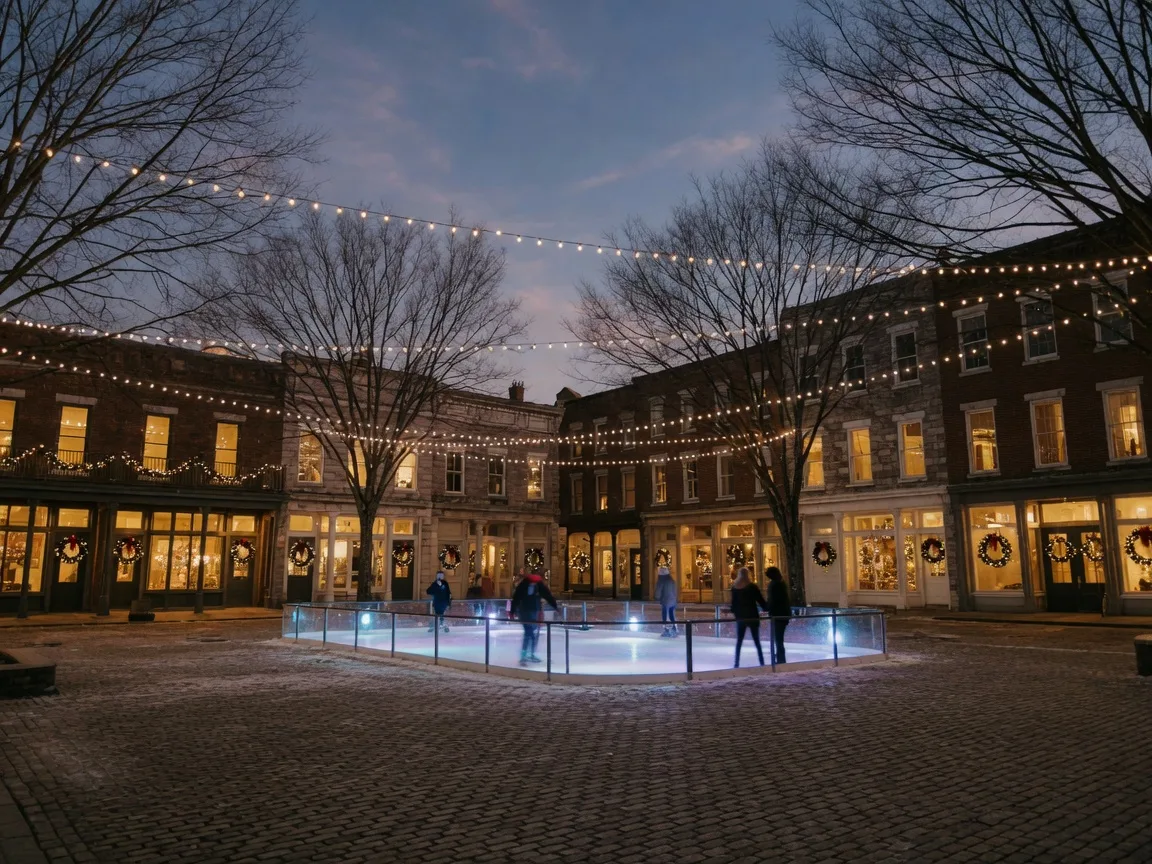
December is a great month to see this in action. The outdoor rink, Holidays on Ice, runs at Market Square from late November through January 3, the WIVK Christmas Parade marches down Gay Street on the evening of December 4, and the Knoxville Holiday Market fills the convention center December 5 and 6. A lunch break at the rink is an actual thing people do here during the holidays, and it is a good reminder that Knoxville's downtown has genuine everyday life, not just event-day life.
If you want walkable without the downtown price, Fourth & Gill is a short walk from the Old City with restored historic homes on tree-lined streets, and Sequoyah Hills offers something different again: a river loop along Cherokee Boulevard that doubles as a lunch break walk. South Knoxville's Island Home keeps you minutes from the Urban Wilderness trails, so your afternoon break can be a hike on a mountain bike trail instead of a lap of the block.
Priority Five: Space for Two Careers and a Yard
If you want suburban space and don't mind the drive, the west and north corridors deliver the most square footage per dollar. Hardin Valley has newer homes with bonus rooms, larger lots, and good schools, and the right neighborhoods are some of the few in the metro where you can find a dedicated office plus a guest room plus a yard under one roof. Farragut is more established and more expensive, but it pairs A-rated schools with well-kept neighborhoods that are popular with remote-working parents. Powell and Karns are the value plays: more house for the money, solid commutes to the north side of town, and quiet streets that are easy to work from.
One caveat for this group: do not assume the suburb has fiber just because the neighborhood looks established. Check KUB's address lookup for every candidate address, and if a home you love is on a street the buildout has not reached yet, ask about the timeline and the fallback options before you commit. Fiber is the difference between a home office that feels effortless and one that fights you all day.
The Neighborhood-by-Priority Cheat Sheet
Pick by Your Top Priority
- Fiber-first, quiet, established: Sequoyah Hills, Bearden, West Hills, Rocky Hill, Fourth & Gill, Fountain City, Halls. Confirm the address on KUB's map, then enjoy the $65 gig.
- Airport access (monthly flyer): Maryville, Alcoa, South Knoxville (Island Home, Vestal), West Knoxville near Pellissippi Parkway.
- Walkable workday breaks: Downtown Knoxville, Old City, Fourth & Gill, Sequoyah Hills for the river loop.
- Two home offices plus a yard: Hardin Valley, Farragut, Powell, Karns.
- Trail access at lunch: South Knoxville near the Urban Wilderness, Island Home, Old Sevier.
Need the Office Energy Sometimes? Knoxville Has That Too
Plenty of remote workers miss the hum of other people working. Knoxville has real coworking options when a change of scenery helps: Knox Base in North Knoxville on North Broadway, CoKno right on Gay Street downtown, and espaces on Kingston Pike in West Knoxville all offer day passes and memberships, and each gives you a different part of town to work from. The West Knoxville location is especially handy for hybrid schedules that combine home days with occasional meetings near the Turkey Creek corridor or the hospitals.
The Home-Office House Hunt Checklist
- Run the fiber check first. Look up the exact address on KUB's availability map before you tour, not after you fall in love.
- Count real offices. One door-closed room per working adult, minimum. Bonus rooms over garages count; kitchen nooks do not.
- Test the airport drive at the actual hour you would fly, and the grocery run at 5 p.m. on a weekday.
- Listen to the street at the times you will be on calls: morning, lunchtime, and after school lets out.
- Note the light. North-facing or tree-shaded rooms keep screens usable on bright Tennessee afternoons.
- Check the second career. If your partner works from home even part time, budget for that separate space now.
Frequently Asked Questions
Is Knoxville actually a good place for remote workers?
Yes, and the reasons are measurable. Ten percent-plus of Knox County workers already work from home, 2026 studies named Knoxville the top metro for net in-migration and a top-ten city for remote workers buying a home, and the economics line up: no state income tax, a cost of living about 14 percent below the national average, and gigabit fiber at $65 a month. The biggest adjustment for newcomers is planning the house itself around a real home office, which is exactly where a local agent earns their keep.
Which Knoxville neighborhoods have KUB Fiber?
Coverage is street by street, but the network is live in pockets across South Knoxville (Vestal, Island Home, Old Sevier), East Knoxville (Parkridge, Morningside), North Knoxville (Fourth & Gill, Fountain City, Halls), and West Knoxville (Bearden, Sequoyah Hills, West Hills, Rocky Hill), with 2025 expansion into Strawberry Plains and Holston Hills and more added continuously toward a projected 2028 buildout. Only an address lookup tells you for sure, so run it before you offer.
How far is the airport from these neighborhoods?
McGhee Tyson Airport is about 12 miles from downtown. Expect roughly 8 to 10 minutes from Maryville and Alcoa, 15 to 20 from downtown, Bearden, and central West Knoxville, and 20 to 25 from Farragut and Hardin Valley. Frequent flyers tend to land in Blount County or South Knoxville; occasional travelers can live almost anywhere in the metro and still make TYS comfortably.
Can I find a home with office space on a normal budget?
Very often, yes. Two-bedroom-plus-den homes are common across the metro, and newer areas like Hardin Valley and parts of West Knoxville regularly include bonus rooms at price points well below what the same floor plan would cost in a large coastal city. The trick is prioritizing the office during the search instead of hoping the house will work out. Write "a door-closed room for work" into your must-haves from day one.
Written by Bart Franklin
Knoxville real estate expert with 6 years of experience and 160+ families served. If you are moving to Knoxville and working from home, we can run the fiber check, the airport test, and the office math together on a call.
Sources and Further Reading
- moveBuddha: 2026 Moving Forecast (Knoxville #1 predicted in-to-out move ratio, 1.61 to 1)
- Quartz: 10 best U.S. cities for remote workers to buy a home (Knoxville listed, 2026)
- WATE: Knoxville tops list of popular cities for relocation, study finds
- Knox News: Knoxville among most popular moving destinations 2026 (Knox County net migration figures)
- DataUSA: Knox County, TN commuting data (2024 ACS, 14.4% work from home)
- Tennessee Dept. of Labor: Tennessee commuting patterns, Dec 2025 (state WFH share 12.9%)
- KUB Fiber: official plan pricing (Gig 1,000 Mbps $65/mo, no caps, no equipment rental)
- City of Knoxville: KUB Fiber coverage areas and 2025 expansion neighborhoods
- Community Networks: KUB Fiber buildout progress and $702M project scale
- McGhee Tyson Airport (TYS): official airport site, Alcoa TN
- Travelmath: drive distance from TYS to Knoxville
- City of Knoxville: Christmas in the City 2026 events calendar
- City of Knoxville: Holidays on Ice at Market Square, Nov 27 to Jan 3
- WIVK: 2026 Christmas Parade, Gay Street, Dec 4 at 7 p.m.
- Knox Base Coworking, 828 N Broadway, Knoxville
- CoKno Coworking, 129 S Gay St, Knoxville
- espaces Knoxville, 4315 Kingston Pike, West Knoxville