Where to Live in Knoxville for the Best Commute

Bart Franklin
Knoxville Real Estate Expert · 160+ Families Served
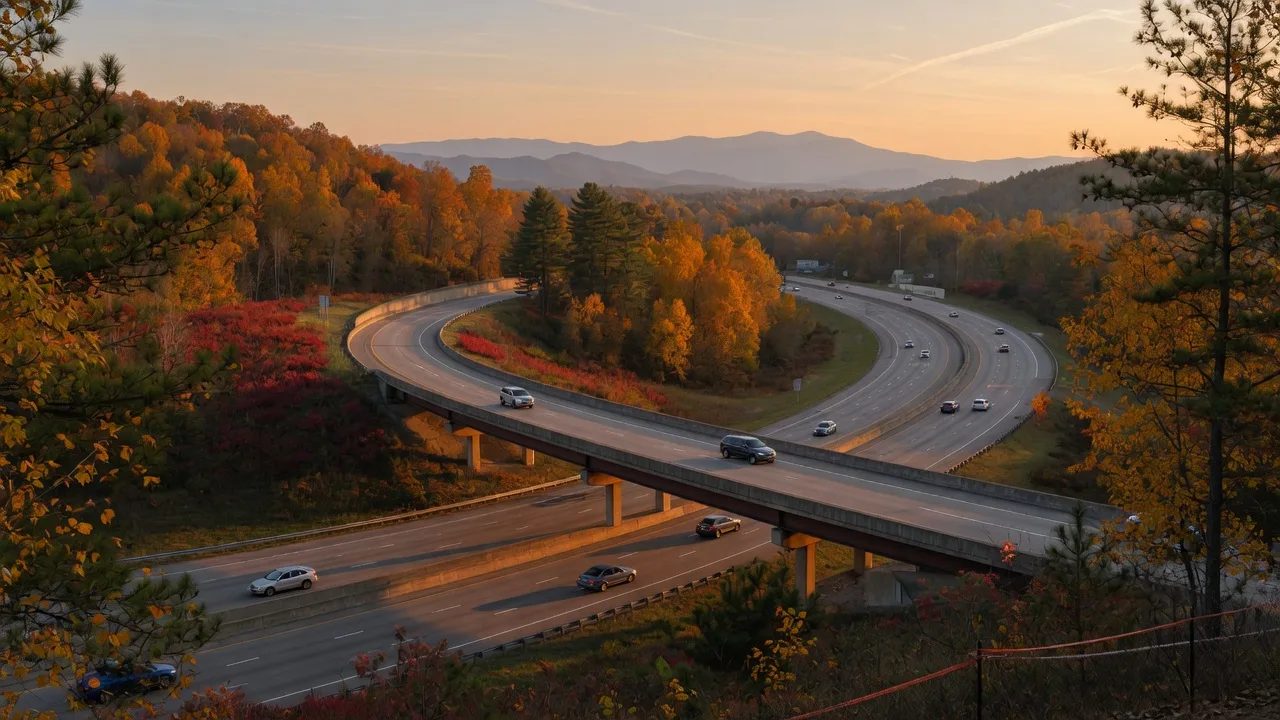
If commute time is your number one priority, the neighborhood you pick matters more than almost anything else in the move. Knoxville is a spread-out metro: the city proper is home to roughly 204,000 people, but the whole region around it, Farragut, Hardin Valley, Maryville, Oak Ridge, Powell, Lenoir City and the rest, pushes past 900,000, and every one of those communities sits on a different drive to the places you will actually go. The good news is that Knoxville still has comparatively quick commutes for a metro its size. The better news is that the differences between neighborhoods are knowable, and I am going to give you the real picture.
I walk relocating families through this exact question every week, and the honest answer is that there is no single "best commute neighborhood." There is a best neighborhood for your commute, based on where your job, your school, and your weekends actually are. This guide breaks Knoxville and its suburbs into commute profiles, gives you the drive times I can verify, and closes with the corridors to watch, so you can match the right community to the daily drive you actually want to live with.
The Big Picture: How Bad Is Knoxville Traffic, Really?
Start with the baseline so the rest of this guide makes sense. Published estimates put Knoxville's average one-way commute around 21 minutes, with typical ZIP-level medians running from roughly 15 to 25 minutes depending on the source. U.S. News cites a figure near 19.5 minutes for the city, while DataUSA's MSA number is closer to 24.4 minutes, and TomTom's traffic index has ranked Knoxville among the quickest commutes in the country. In plain English: most people here are not sitting in two hours of traffic a day, and you should not design your move around a nightmare that mostly does not exist.
The catch is that Knoxville's congestion is concentrated, not spread out. A handful of corridors carry the load, and if your commute touches them at the wrong hour, your drive can double. Weekday peaks run roughly 7:30 to 9:30 in the morning and 4:00 to 7:00 in the evening, and the stretches below are the ones that matter most.
The Corridors That Decide Your Drive
Four roads shape almost every commute conversation in this region, so learn these before you look at a single house.
- I-40 through West Knoxville is the big one. The stretch from the I-40/I-75 split in Loudon County to the I-640 interchange cuts through the heart of West Knoxville, carries over 205,000 vehicles a day, and is routinely described by TDOT as one of the most congested corridors in the state, if not the busiest single stretch of interstate in Tennessee. Anyone commuting from Farragut, Hardin Valley, or West Knoxville into downtown rides this road, and it is the reason west-side rush hour feels bigger than the city's modest average commute suggests.
- Pellissippi Parkway (SR-162) is the north-south spine connecting the Oak Ridge/Hardin Valley corridor to the I-40/I-75 interchange west of town. Near its junction with I-40 it carries roughly 82,000 vehicles a day, so it is efficient when it moves and famously slow when it does not.
- Alcoa Highway (US-129, SR-115) is the main route from Maryville, Alcoa, and McGhee Tyson Airport into downtown, and it has been under major construction and widening for years. It is a great road when the finish line gets closer, but the construction zone is a live variable for south-county commuters.
- I-640 is the northern bypass that lets through-traffic and north Knoxville commuters dodge downtown entirely, connecting I-40 west to I-40 east around the north side. It is a genuine shortcut for Powell, Fountain City, and North Knoxville drivers heading across town.
And the state knows the west corridor is the problem. TDOT's West Knoxville Corridor strategy and its multiyear planning effort are evaluating congestion relief and safety fixes along I-40/I-75, including the possibility of choice lanes, with public meetings held through 2026. Scheduled interchange work at Watt Road (construction estimated around 2029) and Campbell Station Road (estimated around 2032) means the west side will keep changing, mostly in the right direction, but slowly. The region's long-range Mobility Plan 2050, adopted in April 2025, lays out roughly 130 road projects through mid-century. Translation: the corridor list above is stable for planning purposes, and every year of construction is another year you should verify the morning drive yourself.
The Commute Cheat Sheet: Typical Off-Peak Drive Times to Downtown
Here is the fast version, using off-peak, typical-traffic drive times to downtown Knoxville from the communities families actually ask about. These are published estimates and routing-service figures, so treat them as ranges, not guarantees, and add 10 to 20 minutes on weekday peak hours.
Drive Time to Downtown Knoxville (typical, off-peak)
| Community | Typical Drive | Notes |
|---|---|---|
| South Knoxville | 5-10 min | Straight across the Tennessee River; the shortest downtown commute in the metro |
| North Knoxville / Fountain City | 10-15 min | Back streets or I-640 east; avoids most of the west-corridor crush |
| West Knoxville (Bearden / Sequoyah Hills) | 10-20 min | Fast off-peak; the I-40 west corridor is the peak-hour variable |
| Powell | 15-20 min | Clinton Highway to I-75/I-640; roughly 25-30 min at peak |
| Farragut | 20-25 min | I-40 east; the T-bone of West Knoxville rush hour |
| Hardin Valley | 20-30 min | Hardin Valley Road to Pellissippi Parkway to I-40 |
| Maryville | 20-30 min | Alcoa Highway north; construction zone can add real time at peak |
| Alcoa | 20 min | Same Alcoa Highway corridor; 5-7 min from McGhee Tyson Airport |
| Oak Ridge | 25-30 min | Pellissippi Parkway south; locals plan as much as 35-45 min at peak |
| Lenoir City | 30-35 min | I-40 east straight into the busiest stretch; 45-60 min at peak |
Times are typical off-peak estimates from routing services and local sources as of 2025-2026. Peak-hour drive times run materially longer on the corridors noted.
If You Work Downtown or at UT: South Knoxville and North Knoxville Are the Sleeper Picks
If your office, the University of Tennessee, or the hospitals are your daily destination, the shortest commutes in the metro are the ones that barely touch an interstate. South Knoxville sits directly across the Tennessee River from downtown, and residents describe a 5 to 10 minute cross-river drive, with the Urban Wilderness on your side of town when the workday ends. That is the shortest daily grind you can buy in this metro, and the river crossings via the Henley Street and Gay Street bridges handle it well outside peak windows.
North Knoxville, Fountain City, and Old North Knoxville run 10 to 15 minutes to downtown through surface streets and I-640, and they dodge the west-corridor traffic almost entirely. The trade is a different housing stock than the west side, older homes on smaller lots in places, and some of the most charming tree-lined streets in the city. If your priority is time, and your idea of a good evening is downtown dinner, South Knoxville and North Knoxville beat every suburb in this article on paper.
If Your Job Is in West Knoxville: Bearden, West Hills, and Sequoyah Hills Cut the Corridor Out
A huge share of Knoxville's corporate jobs sit on the west side, around Cedar Bluff, Turkey Creek, and Parkside, and if that is where you work, you can entirely avoid the region's worst stretch of interstate. West Knoxville neighborhoods like Bearden, West Hills, and Sequoyah Hills put you 10 to 15 minutes from most west-side office parks off-peak, with surface-street backups instead of interstate ones. It turns out the neighborhoods that are famously convenient to everything, which is exactly how West Knoxville is marketed, are also the ones that make a west-side job commute genuinely pleasant.
The honest catch is the reverse direction: if you live in West Knoxville but commute downtown, you join the I-40 line like everyone else. That is the classic West Knoxville trade, a suburb that is perfect for west-side jobs and harder for downtown ones. Know which direction your drive faces before you pick the west side.
If You Work at Oak Ridge National Lab: The Pellissippi Corridor Is Your Friend
Oak Ridge is one of the region's biggest employment engines, and the neighborhoods that serve it best are the ones strung along Pellissippi Parkway. Hardin Valley residents report a roughly 26 minute door-to-door drive to Oak Ridge, with the far west side of Hardin Valley sitting about 10 minutes from the lab-adjacent Solway area. Pellissippi's northern segment, from Solway down to the I-40/I-75 interchange, is only about six miles, which makes it a fast spine when it is moving and a frustrating one when school traffic or an accident slows it.
For lab employees, the priority ranking usually runs: the Solway/Karns corridor and west Hardin Valley first, then Farragut's north side, then Oak Ridge itself if you want the shortest drive and the independent school district. One resident-level warning I repeat to every lab family: Hardin Valley Road near Pellissippi State and the area schools gets genuinely slow at school drop-off and pickup, so test the drive at the actual hour you will drive it, not on a Saturday afternoon.
If You Fly Constantly: Maryville and Alcoa Are the Airport Pick
McGhee Tyson Airport sits in Blount County, and it changes the commute math for anyone who travels weekly. Maryville runs roughly 7 to 9 minutes from the airport terminal and Alcoa about 5 to 7, which makes the Blount County towns the only communities in this metro where you can leave your driveway 40 minutes before boarding and still have time for coffee. South Knoxville is the runner-up at roughly 20 minutes, and West Knoxville runs closer to 40 at peak. If your travel calendar is brutal, that airport drive saves you real hours every month, and it is a data point most agents never bring up.
Bart's Honest Take: How to Pick When Commute Is Priority One
Here is the framework I use when a family hands me a commute-first brief.
- Define the drive, not the direction. "West Knoxville" is not a commute. Downtown every day, Cedar Bluff every day, ORNL three days a week, and the airport twice a month are four different problems with four different answers. Write down the real destinations, then match the neighborhood to them.
- Test-drive at the wrong hour. The off-peak numbers above will fool you. Drive your candidate commute at 7:45 a.m. and 5:15 p.m. on a weekday before you commit to a suburb. That single hour in the car is worth more than any statistic in this article.
- Two-family houses need two commutes. If one partner works downtown and the other works in West Knoxville, the middle ground (Bearden, Sequoyah Hills, parts of North Knoxville) usually beats either extreme, because it splits the misery evenly instead of loading it on one person.
- Watch the corridor, not the miles. A 10-mile drive on Pellissippi Parkway and a 10-mile drive on the I-40 west corridor are not the same experience. The corridor matters more than the odometer.
- Hybrid schedules change the math. If you are in the office three days a week, a 35 minute commute from Lenoir City or Oak Ridge is a different lifestyle than it was for the five-day-a-week generation. The 45-60 minute peak drives above hurt a lot less at three days a week with a lake view.
The common thread in every happy move I have watched: the family that tested the real drive before choosing, then picked the neighborhood that made the worst day of the week survivable, was happy with the decision for years. The neighborhood guides break down each of these communities in more depth, including home prices and schools, and the community resources page adds the practical details for each suburb.
Frequently Asked Questions
What is the average commute time in Knoxville?
Published estimates put Knoxville's average one-way commute around 19.5 to 21 minutes, with ZIP-level medians typically running from roughly 15 to 25 minutes depending on the source (U.S. News cites about 19.5 minutes; the MSA-level figure from DataUSA is closer to 24.4). Knoxville regularly ranks among the quickest commutes in the country, with congestion concentrated on a few corridors rather than spread across the metro.
What is the worst traffic corridor in Knoxville?
The I-40/I-75 corridor through West Knoxville, from the Loudon County split to the I-640 interchange, is the region's busiest and most congested, carrying more than 205,000 vehicles a day and routinely described as one of the most congested stretches in the state. TDOT is studying relief options, including choice lanes, with interchange rebuilds at Watt Road and Campbell Station Road scheduled in the years ahead.
Which Knoxville neighborhood has the shortest commute to downtown?
South Knoxville has the shortest downtown commute, typically 5 to 10 minutes straight across the Tennessee River. North Knoxville and Fountain City run roughly 10 to 15 minutes. For west-side office jobs, Bearden, West Hills, and Sequoyah Hills keep commutes around 10 to 15 minutes without touching the worst of I-40.
Not Sure Which Commute Fits Your Life?
Drive times are one input, but the right neighborhood balances commutes, schools, and lifestyle. Take my 2-minute lifestyle quiz and get a personalized starting point for your move.
Take the Knoxville Lifestyle QuizSources and Further Reading
- TDOT: West Knoxville Corridor strategy and PEL study
- WVLT: TDOT exploring I-40/I-75 congestion solutions
- TDOT: SR 115 (US 129) Alcoa Highway corridor project
- Wikipedia: Pellissippi Parkway (SR-162)
- TomTom Traffic Index: Knoxville
- U.S. News: Knoxville average commute
- DataUSA: Knoxville MSA commute time
- Knoxville Regional TPO: Mobility Plan 2050
- TravelMath: Farragut to Knoxville drive time
- TravelMath: Powell to Knoxville drive time
- Rome2Rio: Knoxville to Oak Ridge
- Rome2Rio: Lenoir City to Knoxville
- Trulia: South Knoxville neighborhood guide
Written by Bart Franklin
Knoxville real estate expert with 6 years of experience and 160+ families served. If you would like to compare commute times for your specific work addresses, reach out anytime and I will run the drive-by-drive breakdown with you.