The Real Cost of Living in Knoxville: A Monthly Budget for Out-of-State Movers

Bart Franklin
Knoxville Real Estate Expert · 160+ Families Served
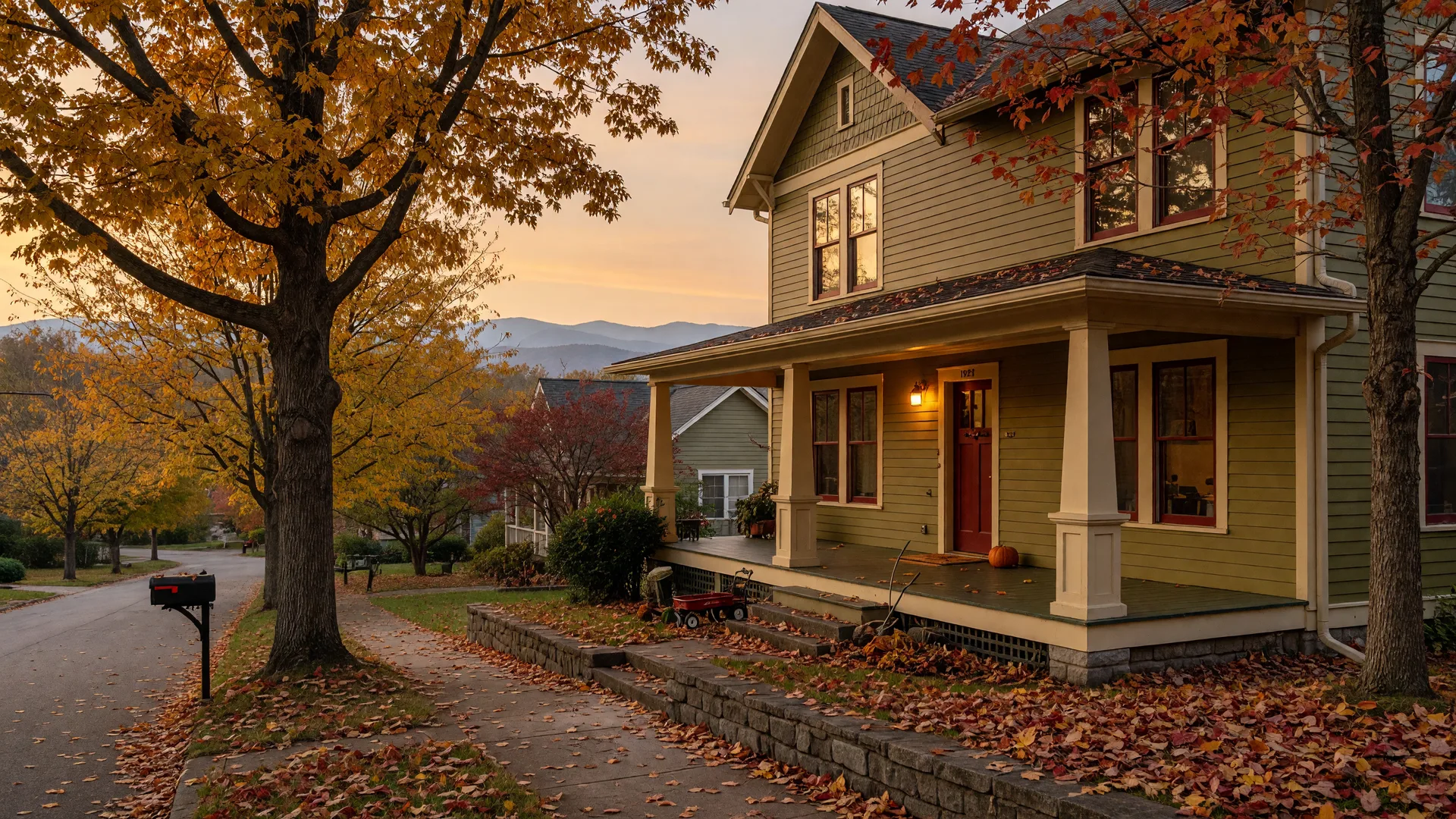
Out-of-state movers usually ask me one question before any other: what does it actually cost to live in Knoxville? The short answer is that the metro runs roughly 14 percent below the national average, and independent cost-of-living indexes consistently rank Knoxville as the most affordable major city in Tennessee. The longer answer is more useful, because the savings are not spread evenly: housing and utilities are where your money goes furthest, groceries are only slightly cheaper, the 9.25 percent sales tax takes a bite out of every purchase, and Tennessee charges no state income tax. This post lays out the real numbers, line by line, so you can build an honest monthly budget before you start packing.
I have helped relocating families run this exact math from California, Texas, New York, and everywhere in between. The figures below come from current 2026 data, with links in the Sources section at the bottom so you can check them yourself. Treat everything as a planning range, not a quote: your actual costs depend on the neighborhood you pick, the home you buy, and how your family lives.
The Big Picture: 14 Percent Cheaper, But Not Evenly
Multiple 2026 cost-of-living trackers put Knoxville about 14 percent below the U.S. average overall: RentCafe, Redfin, and PayScale all land in that range. The Council for Community and Economic Research scores the city at about 85.9 on its index, which makes it the cheapest major city in Tennessee. Here is how the big categories break down, and this mix is the real story of the city: the two largest household costs, housing and utilities, are the ones that save you the most.
- Housing: roughly 23 percent below the national average
- Utilities: about 12 percent below
- Transportation: about 14 percent below
- Groceries: about 2 percent below
- Healthcare: roughly 18 to 21 percent below, depending on the index
That distribution matters for planning. If most of your budget goes to the mortgage and the power bill, Knoxville saves you the most. If your budget is dominated by shopping and eating out, the advantage shrinks, because the sales tax is high and food is close to national prices.
Housing Is the Headline Win
Knoxville's median sale price landed between roughly $400,000 and $415,000 in late 2026 depending on the tracker, with the metro-wide figure closer to $387,000 to $401,000 and prices up only about 1 to 2 percent year over year. That is the number out-of-state buyers should anchor on, because it is dramatically below the national median and far below what the same house would cost in most of the cities families are leaving.
With the average 30-year fixed rate around 7.40 percent in October 2026, the monthly math on a median-priced home looks like this: a $400,000 purchase with 20 percent down is a $320,000 loan, and principal and interest run about $2,215 a month. If you are not ready to buy, rents are reasonable too. A one-bedroom averages roughly $1,064 to $1,340 a month in 2026, and a two-bedroom about $1,345 to $1,615. My market report tracks the latest prices across the metro, and the neighborhood guides show what that budget actually buys in each community.
A Monthly Budget: The Worked Example
Let me put all of this into one table. This is a realistic month for a family of four buying a $400,000 home in Knox County outside city limits, with 20 percent down, financed at the October 2026 average rate.
Typical Monthly Budget, Family of Four, Knox County
| Line Item | Monthly Range |
|---|---|
| Mortgage principal and interest ($320K at 7.40%, 30-year) | ~$2,215 |
| Property taxes (Knox County, outside city limits) | ~$130 |
| Homeowners insurance (Tennessee average) | ~$245 |
| Utilities (KUB electric, gas, water, sewer) | ~$250 to $350 |
| Groceries (moderate plan, family of four) | ~$1,000 to $1,200 |
| Two cars: fuel plus full-coverage insurance | ~$400 to $600 |
| Home internet (gigabit-class plan) | ~$50 to $65 |
| Housing plus core essentials | ~$4,300 to $4,800 |
Mortgage math at the 7.40% Freddie Mac average for the week ending October 15, 2026. Property tax at Knox County's $1.5540 per $100 of assessed value (residential assessed at 25%). Insurance, utility, and grocery figures from the sources below. Cell service, healthcare, and discretionary spending are not included because they vary too much by plan and family.
Two notes on the table. First, the property tax line assumes you live outside Knoxville city limits, where the county rate is $1.5540 per $100 of assessed value. Inside the city, the combined county and city rate runs about $3.7096 per $100 of assessed value, which roughly doubles that line. Second, the transportation line assumes two cars, and it moves with how far you drive and your insurance record; Tennessee full-coverage premiums average about $1,500 to $2,500 a year per car in 2026.
Taxes: The Trade-Off Nobody Expects
Tennessee has no state income tax. It is one of only nine states without one, and for families coming from states that take 5 to 10 percent of wages, that is often a five-figure annual savings that shows up in every paycheck. The flip side is that Knoxville's combined sales tax is 9.25 percent, made up of the 7 percent state rate plus Knox County's 2.25 percent, one of the higher rates in the country, and Tennessee applies it to groceries as well.
Property taxes, by contrast, are genuinely low. Residential property is assessed at 25 percent of appraised value, and at Knox County's $1.5540 rate, a $400,000 home pays about $1,554 a year, roughly $130 a month. Inside city limits that climbs to about $3,710 a year because of the additional city levy, so the city versus county line on the map is worth knowing before you shop.
Utilities and Groceries
KUB, the Knoxville Utilities Board, provides electric, gas, water, and sewer for most of the area, and a typical single-family home runs about $250 to $350 a month depending on the season. Electric is the biggest line at roughly $137 to $150 a month for a typical household, and summer air conditioning and winter heating push the total to the top of that range at the extremes. Groceries sit close to national prices, about 2 to 7 percent cheaper depending on the index you trust. A family of four should plan on roughly $1,000 to $1,200 a month for a moderate grocery budget.
Getting Around Town
Gas in Knoxville ran about $3.82 to $4.07 a gallon through October 2026, with Tennessee's state tax of 27.4 cents a gallon on top of the 18.4-cent federal tax. Full-coverage auto insurance in Tennessee averages about $1,500 to $2,500 a year per car in 2026. The commute is the pleasant surprise for most movers: the metro's average one-way commute is about 24 minutes, well under the national average. The caveat is the I-40 and I-75 corridor through town, Tennessee's busiest interstate segment, which slows hard at rush hour, so a drive that crosses town at 5 p.m. will run noticeably longer than the map suggests.
Healthcare and Internet
Healthcare in Knoxville runs roughly 18 to 21 percent below the national average. On the 2026 ACA marketplace, an individual plan for a 40-year-old averages about $775 a month before subsidies, and a family of four about $2,477 a month, though most households on the marketplace receive subsidies that bring the actual payment much lower. Internet is cheap and fast: entry-level plans run about $30 to $50 a month, and KUB Fiber offers a flat-rate gigabit plan for $65 a month with no contract.
What This Means for Your Move
Put it together and Knoxville is one of the rare places where your money genuinely goes further than the national average on the biggest items while everyday purchases cost about the same or a little less. The trade-offs are real: a 9.25 percent sales tax, peak-season utility bills, and a rush-hour corridor through town. For most relocating families, the net result is more home for the same payment and more take-home pay, since the state takes no income tax. My neighborhood guides break down what each community costs in detail, and the market report tracks the latest prices across the metro. If you want to run your own budget against real Knoxville numbers, that is exactly what a discovery call is for.
Frequently Asked Questions
Is Knoxville really cheaper than where I live now?
For most out-of-state families, yes. The metro runs about 14 percent below the national average overall, and housing, utilities, and healthcare deliver the biggest savings. The exact gap depends on where you are coming from: the savings versus New York, California, or Washington, D.C. are large, while the gap versus a midwestern city will be smaller. The two offsets to remember are the 9.25 percent sales tax and insurance premiums that run higher than in some states.
How much income do I need to afford a median-priced home in Knoxville?
At the October 2026 average rate of about 7.40 percent, a $400,000 home with 20 percent down carries about $2,215 a month in principal and interest, plus roughly $375 a month in county property tax and homeowners insurance. By the common 28 percent housing-cost guideline, a household would want about $110,000 to $115,000 in annual income to keep that payment comfortable. Buyers putting down less, or buying above the median, will need more.
What hidden cost surprises out-of-state movers the most?
The 9.25 percent sales tax, including on groceries, is the one almost everyone underestimates because it hits every single purchase. The second is the property tax jump if you buy inside Knoxville city limits versus the county, and the third is summer and winter utility peaks, which can push a KUB bill toward the top of its range. None of these change the overall picture, but knowing them ahead of time keeps the budget honest.
Written by Bart Franklin
Knoxville real estate expert with 6 years of experience and 160+ families served. If you are comparing Knoxville's cost of living to your current city, reach out anytime and we can run the numbers together.
Sources and Further Reading
- RentCafe: Cost of Living in Knoxville, TN 2026 (~14% below national, category breakdowns)
- Redfin: Cost of Living in Knoxville, TN 2026
- PayScale: Cost of Living in Knoxville, Tennessee
- SpareFoot: Cost of Living in Knoxville (C2ER index 85.9, cheapest major TN city)
- Movoto: Knoxville market trends (Sept 2026 median sold $415,000)
- Zillow: Knoxville home values and market data
- Freddie Mac: Primary Mortgage Market Survey (30-year fixed ~7.40%, week ending Oct 15, 2026)
- Knox County Finance: 2026 tax rates (county $1.5540, residential 25% assessment)
- Criterion: Knox County and city combined property tax rates ($3.7096 in city)
- Avalara: Knoxville sales tax rate 9.25% (7% state + 2.25% county)
- KUB: Residential rates (electric, water, sewer, gas)
- Utility Rates: Average utility bills in Knoxville ($250-$350 typical single-family)
- Grocery Costs by State: Tennessee family-of-four figures
- USDA Food Plans: Monthly cost of food (moderate plan reference)
- AAA: Tennessee gas price averages (state ~$3.83, Oct 2026)
- Tennessee Department of Revenue: Motor fuel tax rates (27.4 cents/gal)
- Insurify: Average car insurance cost in Tennessee 2026
- Insure.com: Average homeowners insurance in Tennessee ($2,945/yr, $300K dwelling)
- ValuePenguin: Health insurance in Tennessee 2026 (ACA individual ~$775/mo before subsidies)
- HealthInsurance.org: Tennessee 2026 ACA marketplace guide
- Rent.com: Knoxville rental market trends 2026
- Speedtest: Best internet providers in Knoxville (entry plans ~$30-$50, KUB Fiber $65 gigabit)
- DataUSA: Knoxville metro average commute (~24 minutes)
- Knox News: I-40/I-75 corridor congestion and TDOT slowdown data